

Latest 2026 data: Over 35% of Hong Kong decision-makers have switched to AI tools — how should enterprises respond?
In Hong Kong’s fast-paced business environment, where return on investment (ROI) is highly valued, the behavioural patterns of corporate decision-makers are undergoing a “quiet revolution”. According to the latest market observations in 2026, more than 35% of local decision-makers first use Google AI (Search Overviews), Perplexity or ChatGPT for preliminary screening when looking for new suppliers or professional services. This figure was only 12% in 2024.
This means that if your brand only appears in Google’s traditional search results, but cannot be cited in AI-generated conversational answers, you may already have lost more than one-third of your potential customers. At YouFind, we have observed that search engines have evolved from simple “link lists” into “knowledge summaries”. Brands must adjust their strategies in order to remain competitive in the AI era.
What is AI search mode? How is it disrupting Hong Kong’s local market?
AI search no longer simply returns a long list of URLs, but integrates search with generation capabilities. When users ask a question, AI directly provides a refined, structured answer and attaches only a very small number of “most relevant and credible” source links. This shift has had a profound impact on the promotional logic of Hong Kong enterprises.
Three core features of AI search mode:
-
Conversational Q&A: Users no longer only enter fragmented keywords, but ask specific questions in Cantonese or English.
Example: In the past, users searched for “rent Office”. Now, users directly ask: “I want to find a commercial building in Kwun Tong that is under 2,000 sq. ft., close to the MTR station, with rent including management fees below HK$40,000. Which agency knows this district best?”
- Answer-first presentation: AI first provides an integrated answer, shifting potential customers’ attention from “clicking links one by one” to “digesting summaries”, which places higher requirements on the precision of brand content.
- Selective citation: AI usually selects only 3 to 8 websites as authoritative sources. This means that even if your Google ranking is on the first page, if AI does not “trust” your content, your brand will still be excluded from the decision-making shortlist.
The shift in query methods: From keywords to decision-oriented searches
YouFind’s data shows that the path of Hong Kong decision-makers has been significantly shortened. Their way of asking questions has become highly targeted, and they rely heavily on AI’s preliminary filtering:
- B2B industrial case: In the past, they searched for “hydraulic pump supplier”. Now, decision-makers directly ask: “Which Hong Kong hydraulic pump distributor has the most stable stock supply? Is there 24-hour technician on-site repair support?”
- Professional services case: As summer approaches, consumers no longer simply search for “which laser hair removal centre is good”, but ask: “Which laser hair removal centre has good reviews, offers high value for money, and does not aggressively hard sell?”
- Medical clinic case: Patients no longer only search for “irritable bowel syndrome”, but ask: “Which Chinese medicine clinic in Hong Kong is relatively well-known for treating irritable bowel syndrome and has treatment cases for scalp eczema?”
Analysis of the commercial value of mainstream AI entry points
| AI tool type | Core technical advantages | Key value for Hong Kong enterprises |
|---|---|---|
| Google AI (AIO / Gemini) |
The strongest search index, skilled at complex reasoning and chart/PDF parsing. | As the dominant local search platform, if a technical solution cannot enter Google AI summaries, it will lose the vast majority of mainstream traffic. |
| Real-time research tools (Perplexity) |
Extremely fast online information gathering, aggregating news, forums and official websites. | Procurement staff often use it to investigate corporate backgrounds and the latest market quotations, making it a new battlefield for establishing “industry authority”. |
| Knowledge integration tools (ChatGPT) |
Skilled at integrating industry regulations, certifications and in-depth market commentary. | Suitable for deploying FAQ content clusters, turning them into “trusted sources” in AI’s eyes and competing for opportunities for the brand to be cited. |
👉 You can first use our free GEO audit tool to help list the content gaps across your entire site as a concrete checklist:
Run a free GEO audit nowYouFind’s recommendation: How to implement a “multi-entry layout” strategy?
To help brands become “recommended answers” at every entry point, YouFind proposes a complete optimisation system:
- “De-PDF-ising” content structure: Convert specification sheets and technical parameters into AI-readable HTML tables, rather than hiding them inside PDF attachments.
- Deploy advanced structured data: Use specialised Schema markup, such as FAQPage and Organization, to give AI a clear “brand manual”.
- Strengthen E-E-A-T signals: Add real Hong Kong local cases, certification documents and test data to the website to establish an irreplaceable foundation of trust.
- Dynamic technical adjustments: Use YouFind’s exclusive Maximizer patented technology to quickly improve the brand’s citation rate in AI engines without requiring large-scale changes to the website architecture.
Frequently Asked Questions (FAQ)
Q1: Will AI search replace traditional Google SEO?
No. The two have a symbiotic relationship. AI search relies on search engine indexes for screening. If your basic SEO performance is poor, AI tools will not be able to scan and cite your content at all.
Q2: Why does Perplexity not mention me even though my service reviews are very good?
This is usually because the content lacks “extractability”. You need to turn your strengths into structured direct answers, allowing AI to identify and capture your service features within fractions of a second.
Q3: How does Google AI (AIO)’s citation logic differ from traditional rankings?
Traditional rankings value page authority, while Google AI places greater emphasis on whether the content directly responds to the user’s “real intent”. It prefers pages supported by data and expert viewpoints.
Q4: Is structured data (Schema) really important for B2B enterprises?
It is very important. Pages with complete markup have about 3.7 times higher chance of being extracted by AI as direct answers than ordinary pages. This is the key to helping AI understand your professional position.
Q5: Will AI refer to online customer cases?
Yes. AI increasingly values “real experience”. Displaying structured local customer cases on the page can greatly increase the probability of being marked as a “trusted supplier”.
Q6: Can agents compete with original manufacturers in AI search?
Yes. As long as agents can demonstrate stronger localised support capabilities, such as spot inventory and local technical teams, AI will tend to recommend the most convenient options to local users.
Q7: Why does AI-generated answers sometimes misunderstand company information?
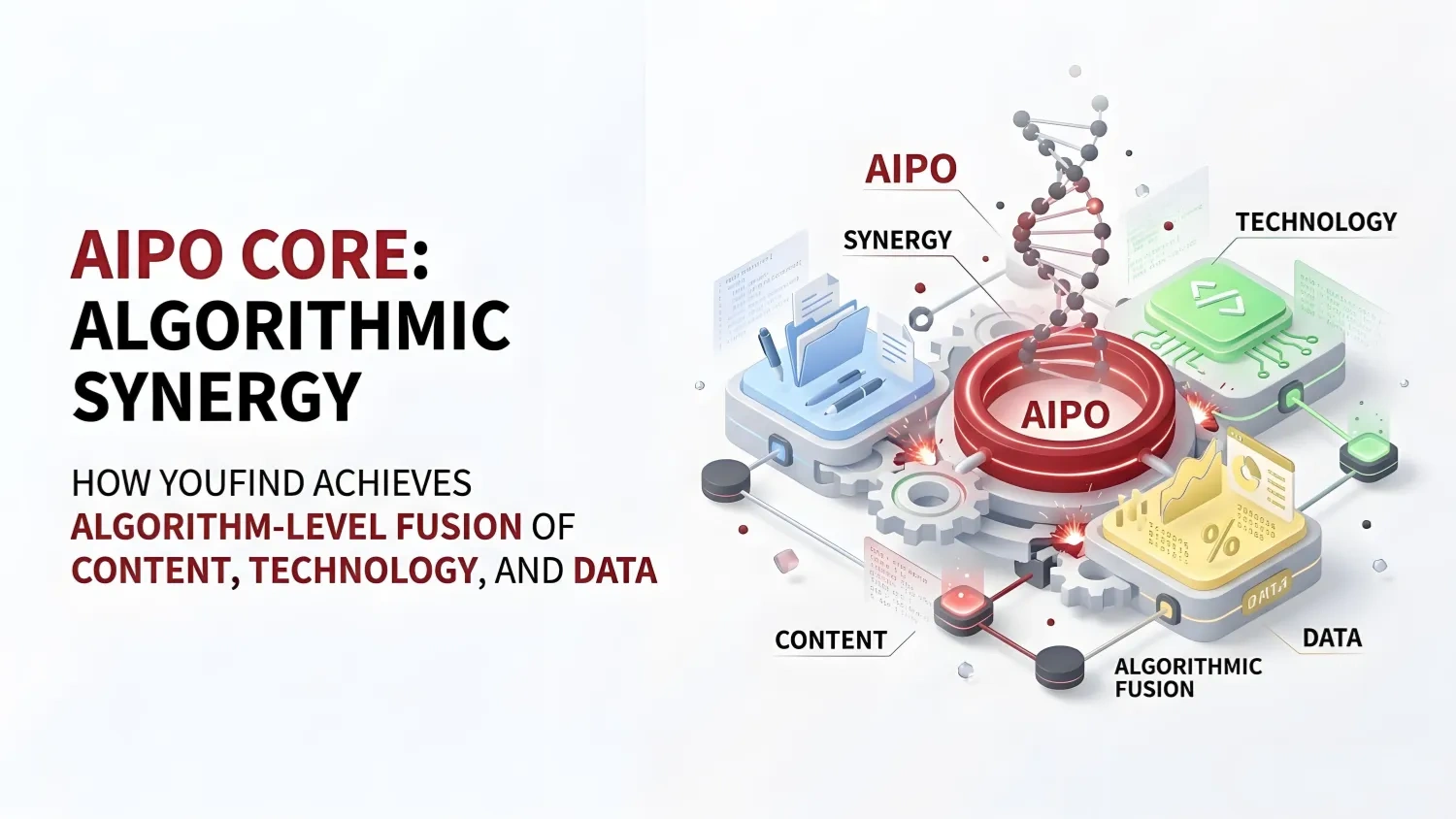
This is usually because the website information is not structured enough. YouFind’s AIPO technology aims to optimise content readability and prevent AI from generating misleading information at the source.
Q8: Does implementing a multi-entry layout require major changes to the existing website?
No. Through YouFind’s patented optimisation technology, we can integrate seamlessly and improve performance, saving enterprises technical R&D time.
Q9: How can I find out my company’s current AI citation rate?
YouFind provides a free AI visibility diagnostic service to help you analyse your current data gaps and provide a concrete optimisation checklist.
Q10: Facing the AI wave of 2026, what is the brand’s top priority right now?
Convert “product advantages” into “AI-preferred data structures”. Let AI not only recognise you, but trust you and recommend you to decision-makers who are searching.
Want to understand your company’s visibility in Google AI and Perplexity? Book a dedicated YouFind diagnostic report now.