

In the current digital marketing environment in Hong Kong, enterprises are facing a structural shift in search behaviour. The popularisation of Google AIO and ChatGPT Search has shifted the way users obtain information from traditional “multi-page browsing” to “single generated results”. This shift is not random, but is based on algorithms processing massive amounts of data and deriving semantic associations. For enterprises, understanding these hidden operating logics is a necessary condition for ensuring that brands can be cited in AI-generated results.
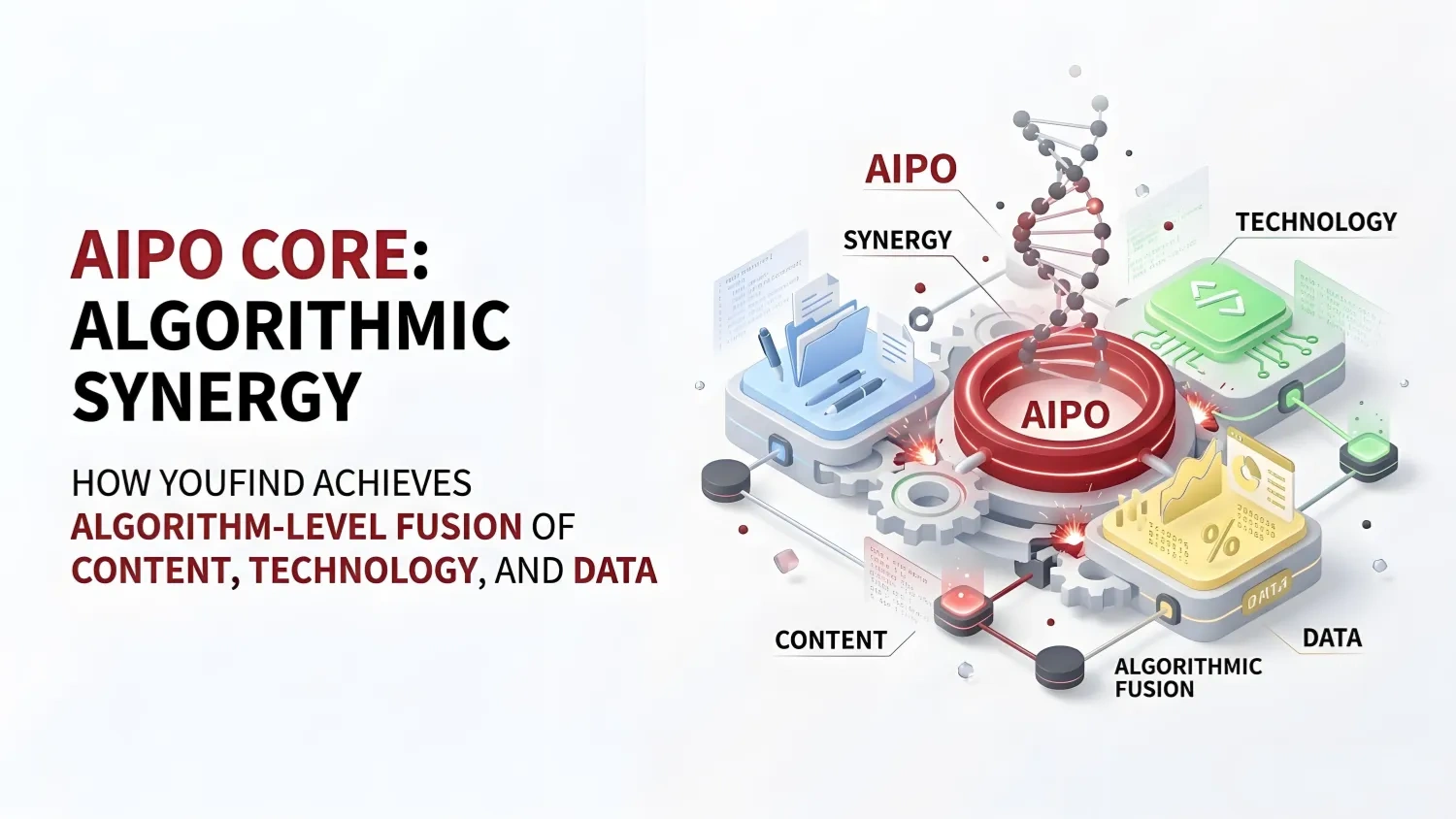
Through continuous monitoring by the AIPO (AI-Powered Optimization) engine, data shows that AI search is not simply keyword matching, but a complex operation of “intent and evidence density”. Effectively using data accumulation and algorithm monitoring models can transform uncertain generated results into predictable commercial paths.
Penetrating algorithmic logic: The battle for intent alignment in the AI era
The underlying framework of AI search engines is fundamentally different from that of traditional search engines. Traditional search relies on indexing and link authority, while AI focuses on understanding semantic space. This requires enterprises’ content layouts to shift from “information provision” to “logical verification”.
1. Semantic weight allocation and trust thresholds
Algorithms allocate weight to content based on the professional dimensions of specific industries. Taking B2B professional services as an example, when potential customers search for “cross-border legal compliance solutions”, AI scans content with highly structured characteristics and support from evidence chains. Through data analysis, it is possible to identify the “trust thresholds” of different industries within AI logic. If enterprise content can exceed this threshold, the probability of being cited by AI will increase by more than 3.5 times.
2. Compression and interception of user decision paths
In an AI-driven environment, the user decision chain is highly compressed. AI tends to directly provide comparative recommendations and final decision references, leading to the popularisation of “zero-click search”. In response to this phenomenon, enterprises need to implement “front-loaded interception”, embedding brand data into AI’s logical chain during the semantic reasoning stage. This strategy ensures that before users issue their final instruction, the brand is already at the top of the recommendation list.
Data prediction model: Transforming algorithm dynamics into customer acquisition ROI
For enterprises that value return on investment (ROI), traffic alone has lost its meaning. What truly carries commercial value is “decision participation”. By using an industry database accumulated over 20 years, a prediction model targeting AI behaviour can be established.
1. Precise identification of high-value search intent
Not all search volume has conversion potential. Through data filtering, it is possible to distinguish between simple informational queries and “transactional intent” with purchasing tendencies. Data prediction models can help enterprises focus their resources on the latter, avoiding budget waste on invalid traffic. This data-based precision targeting can significantly improve enquiry quality in B2B industries.
2. Dynamic monitoring and surpassing of the competitive landscape
Recommendation positions in AI search are the result of dynamic competition. Through reverse-engineering competitors’ performance in algorithms, their logical blind spots can be discovered. For example, some competitors may rank highly, but have loopholes in “evidence completeness”. Enterprises can then targetedly fill in these data nodes, thereby achieving coverage when AI generates answers. This competitive strategy is based on factual data analysis rather than subjective guesswork.
3. Logical reconstruction of content assets
To adapt to the crawling preferences of generative engines, enterprises’ content assets need to undergo “digital restructuring”. This involves transforming unstructured information into knowledge units that conform to AI logic. This can not only improve AI citation rates, but also maintain the consistency and authority of brand information within complex user queries.
| Analysis dimension | Traditional search behaviour | AI-driven decision path | Enterprise response path |
|---|---|---|---|
| Data source acquisition | Clicking multiple blue links across websites | Reading structured answers integrated by AI | Optimise content authority to gain citations |
| Decision speed | Slow (requires users to filter information themselves) | Fast (relies on AI pre-screening) | Embed into the first sequence of algorithmic recommendations |
| Key to conversion | Website UI and copy appeal | Semantic relevance and evidence density | Use AIPO to improve GEO Score™ |
Mastering the user behaviour logic behind AI algorithms means mastering the current market’s traffic entry point. Enterprises should abandon blind spending and shift towards data-driven precision decision-making.
Obtain real performance data for your brand within AI algorithms and identify potential traffic growth points.
Run a free GEO audit nowFAQ
1. How do AI search engines determine the “evidence density” of enterprise content?
Algorithms check whether the content contains specific data, case studies, the correct use of professional terminology, and whether this information is logically consistent with authoritative third-party databases, such as government data and academic journals. Data analysis can help enterprises identify and fill in gaps.
2. For service-based enterprises, how can data insights improve B2B enquiry conversion?
By tracking the “concern patterns” raised by potential customers in AI conversations, enterprises can targetedly generate data-driven content that resolves these concerns. When AI can cite your content to answer users’ technical concerns, conversion intent will increase significantly.
3. Why does a website rank highly, but fail to be cited in AI-generated results?
A high ranking only means it meets the weighting model of search engines, but it does not necessarily meet the reasoning logic of semantic generation. AI citations place greater emphasis on the “summarisability” and “logical relevance” of content. This requires GEO optimisation to adjust the content structure.
4. Can data monitoring models distinguish the recommendation preferences of different AI platforms, such as GPT-4 and Claude?
Yes. Different models have different training datasets and weighting tendencies. Data monitoring can reveal different platforms’ preferences for specific industry information, allowing enterprises to carry out differentiated content layouts.
5. How can enterprises monitor “semantic drift” in AI’s evaluation of a brand?
Through sentiment monitoring and semantic tag analysis, it is possible to observe whether AI has incorrectly placed the brand into irrelevant or negative contexts. Data insights can detect this drift in time and correct the brand’s authority tags within algorithms through AIPO.
6. Will content restructuring affect existing SEO results?
Correct content restructuring is a win-win for optimising both SEO and GEO. Adding structured data and logical chains can not only improve AI citation rates, but also significantly enhance the website’s professional authority (E-E-A-T) in traditional search.
7. In the era of zero-click search, how should enterprises measure the ROI of data analysis?
They should shift towards measuring “brand mention rate”, “attributed conversions” and “AI citation paths”. Data analysis can track the decision nodes of users who did not click on the website but eventually turned to brand enquiries.
8. What is the level of data coverage for AI search in Hong Kong’s local market?
At present, AI’s understanding of Traditional Chinese and Hong Kong-specific business contexts has become highly mature. Data insights show that content with a Hong Kong local professional background has extremely high priority in AI answers targeting local search intent.
9. If competitors have already started AI optimisation, can data analysis still provide an advantage?
Data analysis can identify “over-optimisation” or “information gaps” in competitors’ optimisation strategies. AI algorithms have extremely high requirements for authenticity and logic, and precise data intervention can help brands maintain higher consistency in competition.
10. How long does it usually take for implementing an AIPO data strategy to show results?
Based on the update frequency of AI models, obvious changes in AI citation rates and recommendation positions can usually be observed within 4 to 8 weeks after implementing data-driven restructuring. Continuous data monitoring can ensure the long-term stability of this advantage.