
Why does producing 50 AI articles every day cause website traffic to “fall off a cliff” within one month?
In Hong Kong, a market that values efficiency and returns, many enterprises are falling into a kind of “content output anxiety” in order to keep up with the pace of content updates. To quickly fill the gaps in their long-tail keyword layout, many brands have started trying to let AI tools fully take over content creation, attempting to win through quantity.
However, the real-world data is sobering. According to multiple local cases observed by YouFind, text generated in bulk purely through code not only fails to build a competitive moat for brands, but also causes websites to fall into the “quality trap” of search engines. When backend impressions and enquiry conversion rates both decline, enterprises only then realise that this automated information lacking genuine insight is damaging the authority their brands have built over the long term.
“Why did my website ranking get downgraded by Google after I used the latest AI generation technology?” This is the most common question many local marketing directors face amid the 2026 search algorithm updates.
Content marketing today has entered its most stringent screening period. The algorithms of search engines and generative engines (GAI) have already evolved to the stage where they can accurately identify “mechanical repetition”. To make a breakthrough in local promotion in Hong Kong, the core lies not in mindless generation, but in how to combine precise long-tail keyword strategies with GEO (Generative Engine Optimization) to achieve “intelligent content manufacturing” with strategic depth.
Why do search engines regard 90% of AI content as “invalid corpus”?
When content enters the index databases of Google or Baidu, the algorithm’s first task is to filter out information that lacks value. Google’s E-E-A-T guidelines clearly state that “Experience” is a core dimension for measuring content value.
For local enterprises in Hong Kong, if an article discussing retail transformation or financial compliance lacks unique insights from frontline practice or concrete examples from the local market, search engine crawlers will quickly mark it as “low-quality content”. This kind of bulk output detached from real business scenarios is essentially depleting a brand’s digital assets rather than accumulating them.
Technical weaknesses of blind generation:
- Distortion of brand tone: Relying on generic Prompts will lead to monotonous wording and phrasing in the output, causing the brand to completely lose its original recognisability.
- Factual errors (AI hallucinations): Large models are based on probabilistic prediction and can easily produce deviations in Hong Kong’s local business data or legal details, seriously damaging corporate credibility.
- Lack of logical depth: AI is good at integrating existing information, but it cannot deeply analyse a company’s specific after-sales data or customer feedback. It lacks correction from a human professional perspective.
Assessing the limitations of mainstream AI tools in local enterprise applications
Many content creators try using popular tools. Although they perform well in handling single-point tasks, from the perspective of enterprise-level traffic acquisition and asset management, these “outsourced production” tools clearly lack a closed-loop system:
| Tool type and examples | Core strengths | Limitations for enterprise promotion |
|---|---|---|
|
Creative generation tools (such as Claude 3.5, Writesonic) | Fluent writing, suitable for drafting long-form articles. | Lacks lexical analysis of Commercial Intent. |
|
Real-time retrieval tools (such as Perplexity AI) | Extremely fast at collecting information online. | Only remains at the level of information aggregation and cannot directly increase the brand’s citation rate in AI summaries. |
|
General collaboration tools (such as ChatGPT, Copilot) | Applicable across all scenarios, with a low barrier to use. | Output structure is uniform and is highly likely to trigger the algorithm’s “duplicate content” detection. |
AIPO Engine: How does YouFind reshape industry competitive barriers?
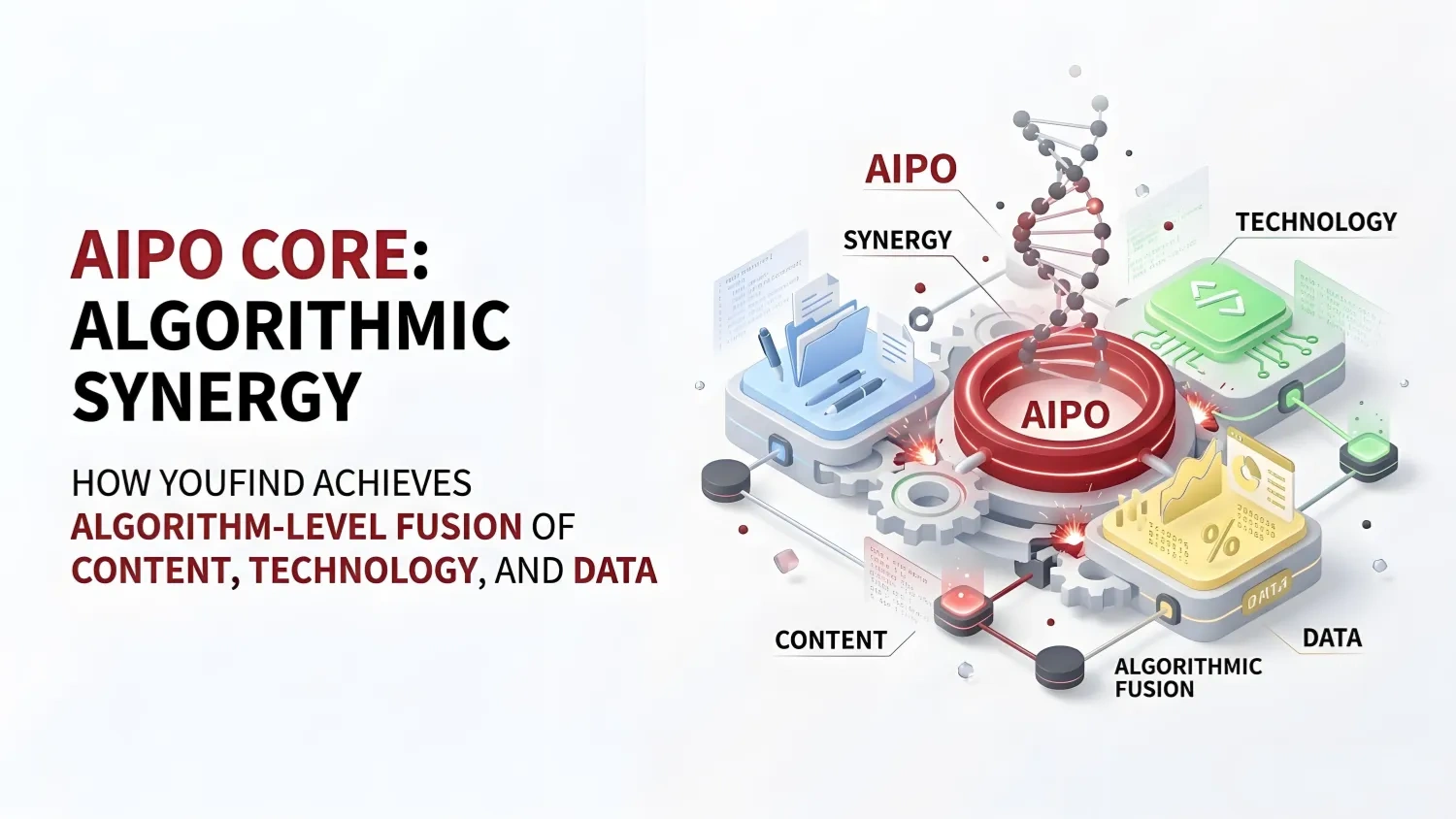
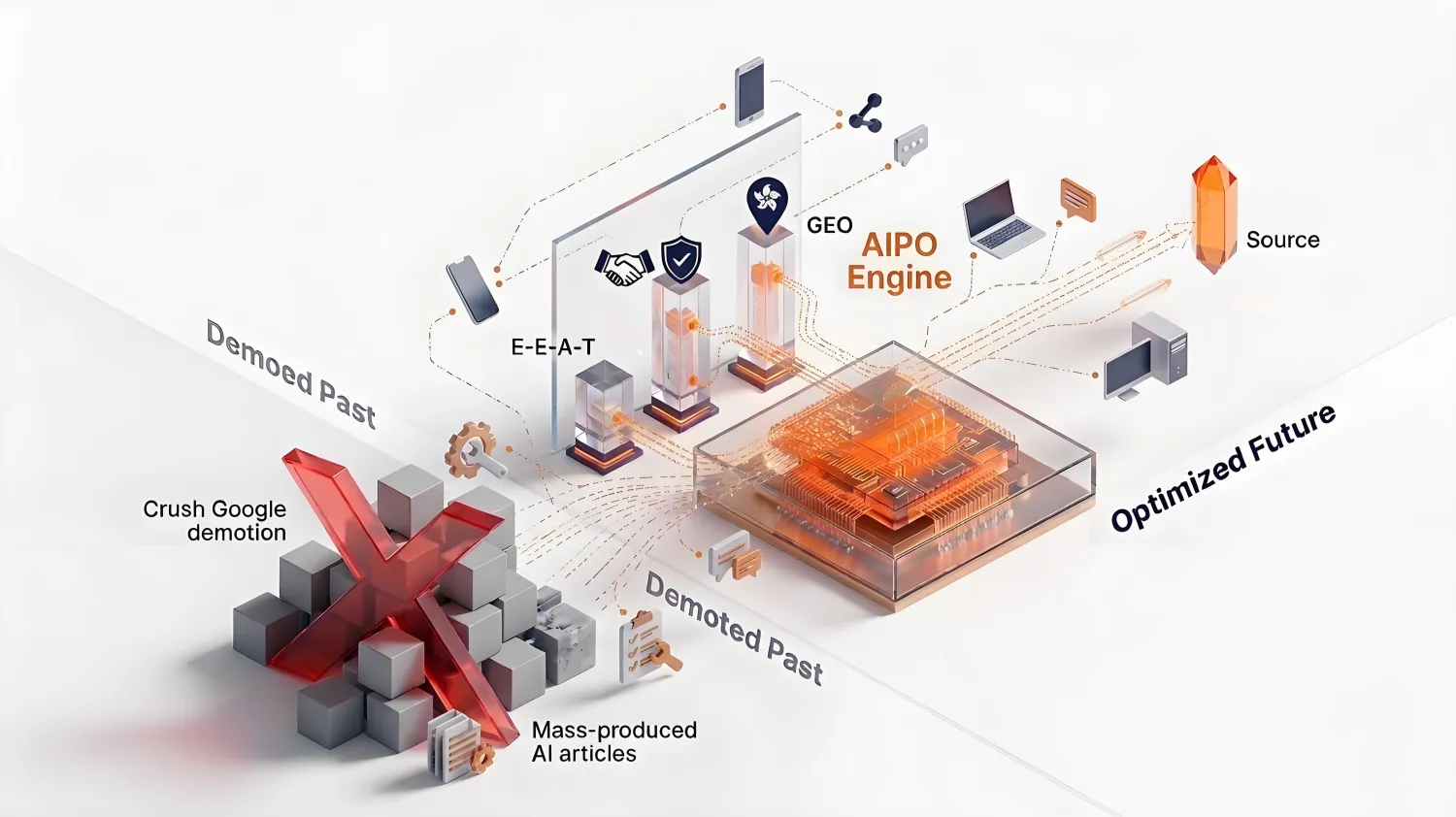
In response to the trend of the traditional SEO battlefield shifting towards GEO (Generative Engine Optimization), YouFind, leveraging its deep digital marketing expertise, has developed a dual-core technical solution of “traditional SEO + AI Platform Optimization (AIPO)”.
The core objective of AIPO is to make brands become an “authoritative information source” in the eyes of generative AI. We ensure content accuracy through a highly structured process:
- Data gap monitoring: Using the GEO Score™ algorithm to precisely identify high-value GEO keyword gaps that competitors have not yet occupied.
- Source structure decomposition: Reverse-optimising the content structure to make it easier for algorithms to extract it as an authoritative summary.
- Topic layout and framework design: Combining SEO standards with local users’ search habits to design frameworks with professional depth.
- E-E-A-T modelling: Introducing structured data markup to enhance trust from search engines and AI.
Through YouFind’s exclusive Maximizer patented system, enterprises can increase their brand citation rate in Google AI Overviews by 3.5 times without spending significant technical costs to rebuild their website architecture.
👉 You can first use our free GEO audit tool to help you list the content gaps across your entire site as a concrete checklist:
Run a free GEO audit nowEstablishing a professional risk control mechanism for “human-AI collaboration”
Precisely targeting long-tail conversion keywords
Use AIPO to uncover long-tail keywords with extremely high conversion potential, such as “How Hong Kong logistics enterprises can reduce operating costs through digitisation in 2026”, targeting precise customers who are at the decision-making stage.
Building a brand-exclusive knowledge base
Transform the enterprise’s internal professional white papers and successful case studies into structured data, ensuring that the output content possesses strong industry penetration.
Strictly safeguarding the fact-checking line of defence
YouFind’s industry experts intervene in the AI output process to correct logical deviations. This collaborative mechanism ensures that every piece of content can be transformed into a high-value digital asset.
Enterprise-level content generation and the AIPO Engine: Frequently asked questions
Q1: Will using AIPO to generate content be judged by search engines as AI spam?
No. What search engines penalise is low-quality, repetitive and unhelpful information. YouFind’s AIPO Engine emphasises E-E-A-T modelling and human-AI collaboration, producing high-quality commercial content that meets algorithm requirements.
Q2: What is the fundamental difference between AIPO and general AI writing tools on the market?
Tools on the market are mostly single-point creation tools and lack strategy. AIPO is a complete solution integrating data monitoring, competitor decomposition, structured modelling and patented systems, aiming to improve a brand’s “citation rate” in AI engines.
Q3: Why does the article emphasise that “long-tail keyword layout” is more effective for local promotion?
Generic keywords are highly competitive and have vague intent. Users behind precise long-tail keywords (such as specific industry solutions) are usually at the decision-making stage, bringing more accurate enquiries and higher conversion rates.
Q4: Can our existing old website directly integrate with AIPO optimisation results?
Yes. With YouFind’s exclusive Maximizer patented system, enterprises can seamlessly integrate AIPO’s optimisation layout without investing high costs in redeveloping their website.
Q5: How long does it usually take to see an increase in the frequency of AI engines citing our data?
This depends on the competitiveness of the industry. Generally speaking, after AIPO structured optimisation, the visibility of a brand’s authoritative data on platforms such as Google AIO will show significant growth within one quarter.
Q6: What specific role do human experts play in the AIPO process?
Experts are responsible for proofreading brand tone, fact-checking and injecting local practical experience that AI cannot simulate, ensuring that the content can resonate with real customers.
Q7: If we already have an internal writing team, do we still need AIPO?
Yes. AIPO can serve as your team’s “technical brain”, providing precise data analysis and frameworks, allowing your team to focus on higher-level brand strategy.
Q8: How can the actual business value brought by AIPO be evaluated?
We provide detailed data reports, including the brand’s citation ratio in AI engines, long-tail keyword ranking share, and the growth in valid enquiries from the website.
Q9: What information do we need to provide to build a “brand-exclusive knowledge base”?
We will guide you in collecting product manuals, sales scripts and case studies. We will transform these into AI-readable data to ensure that AI learns the most authentic brand voice.
Q10: Does the AIPO service support multilingual layout?
Yes. AIPO’s technical architecture is equally applicable to multilingual markets, helping brands establish authoritative visibility in generative engines worldwide.
Would you like to obtain an “AI Visibility Diagnostic Report” tailored to your company’s brand? Contact YouFind’s professional consultants now.