
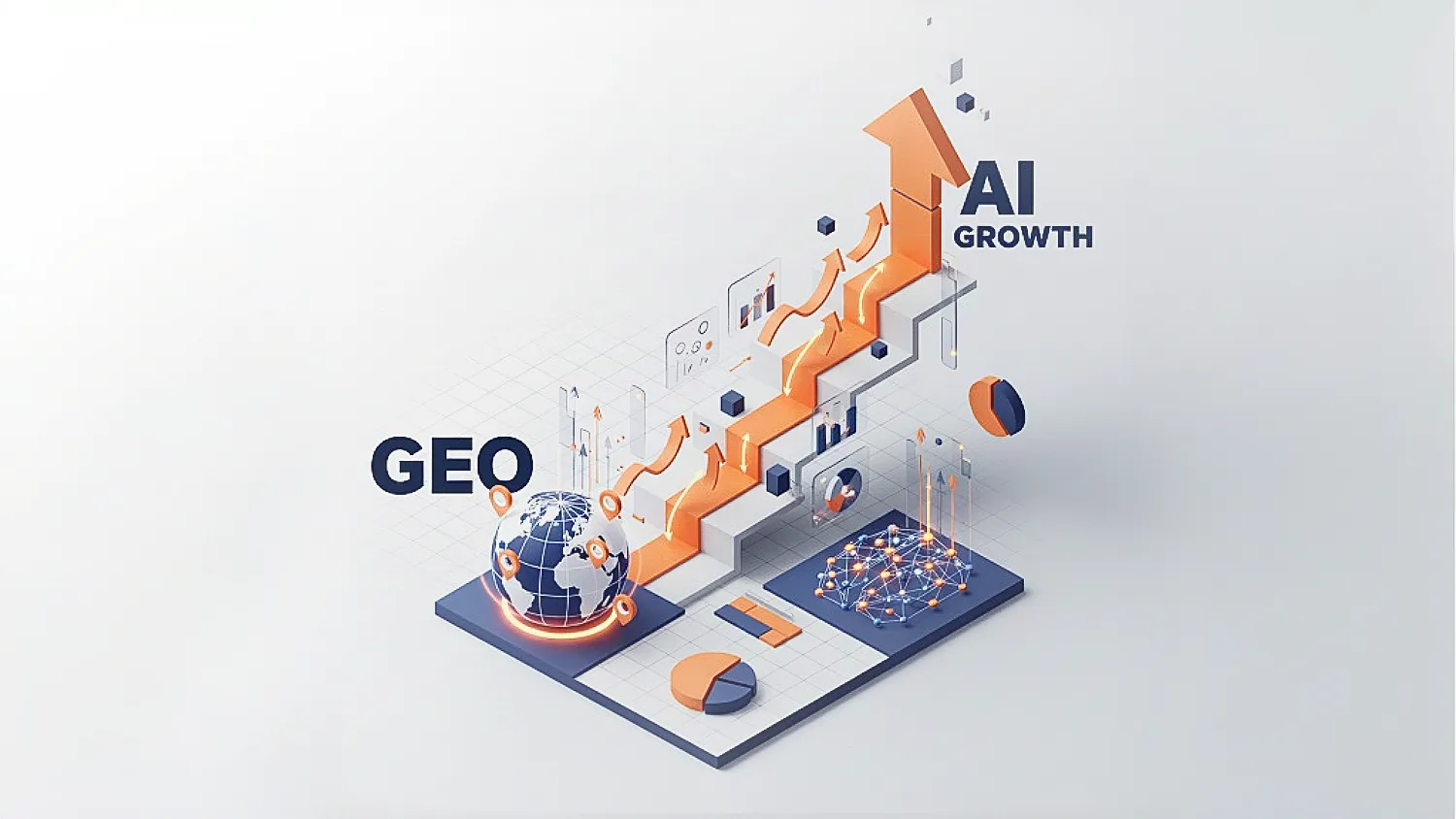
As a digital marketing agency with 20 years of experience, we have witnessed the evolution of search engines from simple keyword matching to today’s AI-driven Generative Search Era. The most pressing question for many business owners today is: “Why are my keyword rankings still there, but my website traffic has fallen off a cliff?” The answer isn’t that your content has gotten worse; it’s that the rules of the search game have been fundamentally rewritten.
Before diving into deep strategies, we recommend taking this quick 3-question self-test to see if your brand is at risk of being “AI-marginalized”:
- When searching for your core services on Google, does the summary generated by Google AI (AI Overview) cite your website link?
- When users ask ChatGPT or Perplexity for industry-related advice, is your brand included in the recommendation list?
- Does your website content feature a clear content structure that allows AI to extract key summaries within 3 seconds?
If any of the answers above are “No,” your website may be relegated to a “cold container of code” rather than becoming an “authoritative asset” in the AI era.
Why “No Website Traffic” is Becoming the New Normal
In the past, we chased rankings for “blue links.” However, with the proliferation of Google AI (especially AI Overviews), the user journey has undergone a qualitative change. This phenomenon is known as “Zero-Click Search,” where users find their answers directly on the search results page without needing to click through to any website.
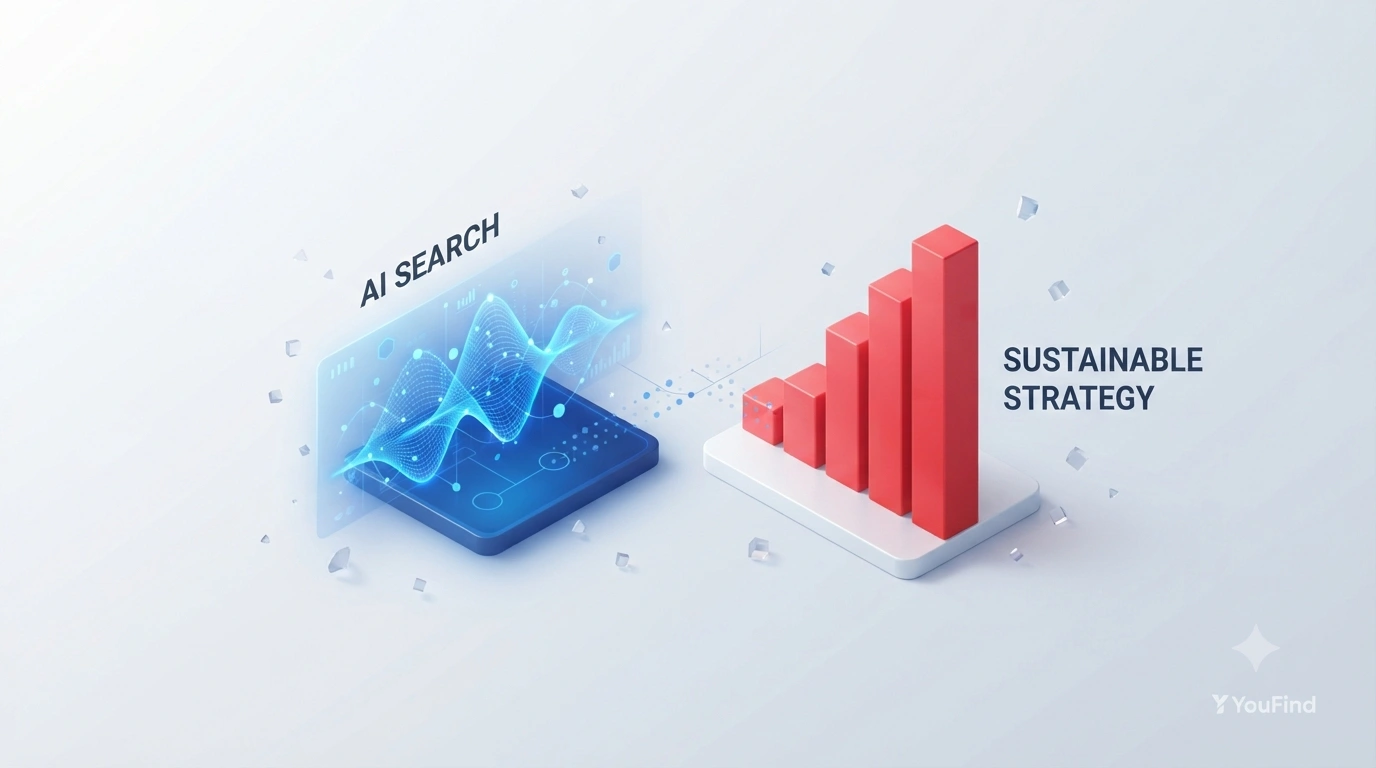
Google AI generates a summary based on multiple sources. While this “intercepts” traditional traffic, it also creates a new “traffic high ground”: Brand Citations. Traffic is no longer distributed evenly among the top ten; instead, it is highly concentrated within the 3-5 authoritative links cited by the AI as sources.
| Dimension | Traditional SEO Era | AI Search (GEO) Era |
|---|---|---|
| Core Objective | Competing for Top 3 Keyword Rankings | Securing AI Summary Citations & Recommendations |
| Traffic Source | Users proactively clicking blue links | Users clicking AI citations for in-depth info |
| Content Format | Long-form articles optimized for keyword density | Structured, atomic, E-E-A-T-rich knowledge blocks |
| Success Metrics | Click-Through Rate (CTR), Rankings | Citation Rate, Brand Mentions |
YouFind Senior Expert Tip: A common misconception is that ranking #1 guarantees traffic. In fact, if an AI summary occupies 80% of the “above the fold” space and doesn’t cite you, the CTR for the #1 ranking will shrink significantly. The strategic focus must shift from “fighting for rankings” to “fighting for citations.”
What is GEO? Clarifying the Differences Between SEO, AEO, and AI SEO
In the digital marketing world, terminology evolves rapidly. We need to establish a common language. GEO (Generative Engine Optimization) is the most cutting-edge strategic framework. Its core purpose is to increase a brand’s visibility and citation probability within Generative AI (such as Google Gemini, ChatGPT, and Perplexity) by optimizing website content and structure.
To simplify, we can compare it with related concepts:
- SEO (Search Engine Optimization): Traditional optimization targeting crawlers for the purpose of ranking.
- AEO (Answer Engine Optimization): Targeting voice search or featured snippets to provide precise answers.
- AI SEO: A broad term referring to using AI tools to assist SEO or optimizing for AI algorithms.
- GEO: The current ultimate form; it’s not just about “having the answer,” but ensuring content possesses high-value attributes for AI “generation” and “restructuring.”
Three key takeaways regarding GEO:
- GEO is about making AI understand you so it is willing to “endorse” and recommend you.
- GEO doesn’t just optimize for Google; it covers all AI platforms across the web.
- GEO converts “high-intent” traffic, as users who click AI citations are typically seeking deep decision-making information.
What Content Does Google AI Prefer to Cite? 4 Controllable Factors
As a digital marketing firm, we have observed that Google AI citations are not random; they follow a predictable logic. To transform your website from a code container into an authoritative asset, you must satisfy these four “citable” factors:
1. Understandability (Clear Structure)
AI doesn’t “read” like a human; it “parses.” If your articles lack hierarchy, it’s difficult for AI to grasp the key points. You must use correct H1-H3 tags and ensure every paragraph has a clear purpose. For example, using “What is…” as a heading directly maps to common AI query patterns.
2. Verifiability (Strong E-E-A-T Signals)
In the AI era, Google AI places extreme importance on the authenticity of content. Every article should identify the author (expert background), cite sources, and include a “last updated” date. These signals build trust and reduce the risk of AI “hallucinations,” thereby increasing citation rates.
3. Comparability (Data and Comparisons)
AI excels at processing tables and lists. When you organize product differences, specifications, or use cases into HTML tables, AI can easily extract and present them in search results, which is highly effective for website traffic conversion.
4. Reusability (Atomic Content)
Deconstruct content into “atomic-level” modules, such as FAQs, summaries, and step-by-step guides. Use Structured Data (Schema Markup) to tell the AI directly: “This paragraph is the answer; that section is the process.” This allows your brand to occupy more prominent positions in AI Overviews.
YouFind’s AIPO Methodology: Making GEO Quantifiable in Four Stages
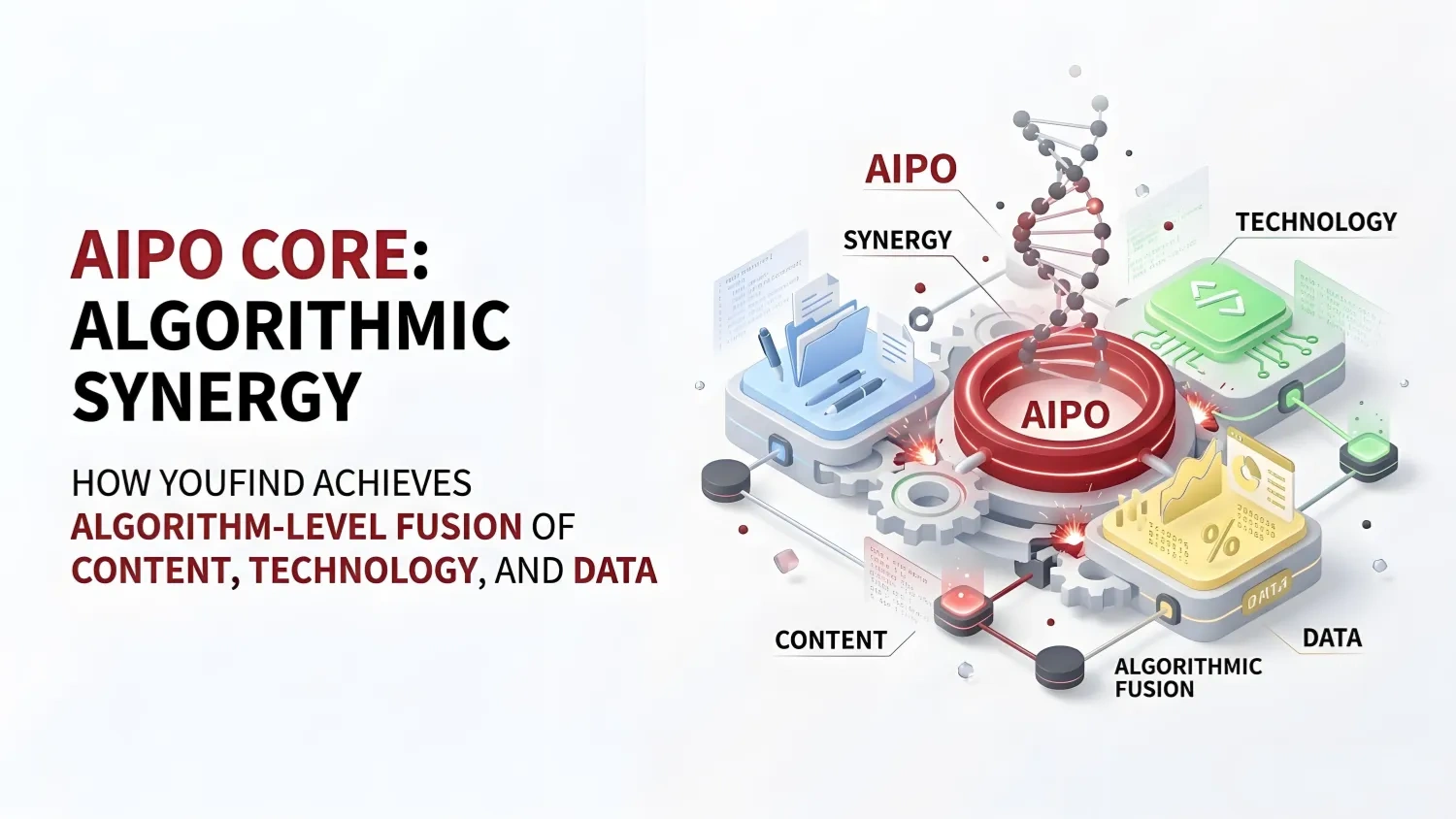
Many companies feel aimless when doing AI SEO because they lack data support. YouFind has accumulated years of experience to develop a proprietary AIPO framework, ensuring every dollar of your budget translates into visible brand assets:
- AI Audit (AI Visibility Diagnosis): Establish a visibility baseline and analyze brand citation gaps.
- Optimization (Content & Semantic Optimization): Strengthen structured markup to improve AI crawling efficiency.
- Activation (Multi-platform Activation): Launch cross-platform indexing to cover different AI usage scenarios.
- Monitoring (Continuous Monitoring & Iteration): Monitor data in real-time to ensure sustained brand authority growth.
The Value of YouFind Maximizer: Precise Optimization Without Rebuilding Your Site
A major pain point for many enterprises is outdated website architecture. Redeveloping a website to meet AI standards is time-consuming, expensive, and risky. This is where YouFind Maximizer provides value.
YouFind Maximizer is a high-efficiency optimization solution that can be implemented without rebuilding your website. Its business value includes:
- Speed: No need to wait for technical development schedules. Rapidly deploy structured data and GEO optimization layers to see website traffic recovery in the short term.
- Lower Cost: Avoid the communication costs and development fees associated with large-scale website revamps, allowing resources to be focused on high-value content assets.
- Low Risk: Perform layered optimization without changing the core functions or code of the original site, ensuring business operations remain undisturbed.
| Enterprise Pain Point | YouFind Maximizer Solution | Business Result |
|---|---|---|
| Outdated tech, unable to update Schema | Plug-in technical layer, direct injection of structured data | Immediate SEO performance boost |
| Abundant but messy content, AI can’t parse | Semantic tag auto-optimization and content restructuring | Significant growth in AI citation rates |
| Lack of technical staff, slow optimization | Fully automated management platform, no coding required | Drastically shortened market response time |
Multi-platform GEO Deployment: Where Else Should Your Brand Be Seen?
A vital reminder: don’t put all your eggs in the Google AI basket. Today’s user behavior is fragmented. They might use ChatGPT to write proposals, Perplexity for product research, or Gemini to plan itineraries. Your brand needs to be positioned across all these “decision entry points.”
Core Strategies for Cross-platform Adaptation:
- Google AI Overview: Focuses on information authority and structured markup.
- ChatGPT / GPT-4o: Focuses on brand contextual description and the probability of being “talked to.”
- Perplexity AI: Focuses on real-time content and high-quality external link citations.
- Gemini AI: Focuses on integrated information within the Google ecosystem (e.g., Maps, YouTube).
Professional Advice: The same piece of content, processed through YouFind, can be transformed into “content modules” suitable for different platforms. For example, service introductions can be turned into FAQ formats for ChatGPT, while data can be organized into charts for Perplexity citations.
Turning “Exposure” into “Traffic”: Conversion Design in the GEO Era
Being cited by AI is only the first step. Our ultimate goal is to turn this “authoritative exposure” into real business. This requires deep conversion design on your content pages:
1. Provide “Deeper” Value
Since AI has already provided the basic answer, the user’s purpose for clicking into the website is to “get what AI cannot provide.” This could be an actionable tool, a deep industry white paper, or professional consulting services. This is the key to maintaining website traffic conversion rates.
2. Set Clear CTAs (Call to Action)
On the landing pages cited by AI, guidance should be provided based on the user’s current search stage (Information Gathering vs. Commercial Decision). For example: “Download the GEO Self-Checklist” or “Book an AI Website Audit.”
3. Updating the KPI Mindset
We should no longer fixate on a single “Organic Traffic” figure. In the GEO era, the number of Brand Citations and “Branded Search Volume” are more indicative of success. When a user sees your brand on AI and then proactively searches for your brand name, that is the highest quality traffic.
10-Minute GEO Quick Self-Checklist
Check if your website content possesses the following traits, which will determine your competitiveness in the AI era:
- Content Hierarchy: Does every major page have clear H2 and H3 tags? (Risk: High)
- Summary Blocks: Is there a precise summary within 150 words at the beginning of the article? (Risk: Medium)
- FAQ Deployment: Does the page include FAQs with FAQ Schema? (Risk: High)
- E-E-A-T Evidence: Is there a clear author bio and credentials in the field? (Risk: Medium)
- Data Presentation: Is key data presented using HTML tables rather than images? (Risk: High)
- Brand Consistency: Is the description of your brand name and core services unified across the web? (Risk: Medium)
Under the AI wave, SEO hasn’t disappeared; it has evolved into a higher-level “Digital Authority Competition.” GEO is a long-term project that requires us to build from the ground up, turning a website into an “Asset Library of Citations” that AI trusts and understands.
If you feel your website traffic is stagnating or you feel lost amidst Google AI changes, now is the perfect time to re-examine your strategy. Through AIPO’s systematic process and Maximizer’s technical support, your brand can do more than just survive in search results—it can establish unshakable leadership.
Frequently Asked Questions (FAQ)
Q1: What is GEO? What is the biggest difference from traditional SEO?
GEO (Generative Engine Optimization) aims to improve a website’s visibility and citation rate in Generative AI (like Google AI Overview and ChatGPT). Unlike traditional SEO, which fights for “blue link rankings,” GEO focuses more on “AI-understandability” and “authoritative citation value.” Simply put, SEO is about getting a website to “rank in front,” while GEO is about getting a website to “be recommended” in AI answers.
Q2: Why did my website traffic drop after Google AI summaries appeared?
This is because Google AI provides answers directly on the Search Engine Results Page (SERP), allowing users to satisfy their needs without clicking through to a website. If your content only provides basic information (like “What is…”), the risk of traffic interception is extremely high. To solve this, you must optimize content so AI labels you as an “authoritative source,” attracting users who need deeper information to click.
Q3: What content is needed to get my brand cited by ChatGPT, Gemini, or Perplexity?
These AI platforms prefer well-structured, factually accurate, and uniquely insightful content. You need: 1. Clear structured data; 2. Strong E-E-A-T signals (e.g., expert endorsement); 3. Atomic content blocks (e.g., FAQs, comparison tables); 4. Consistent brand mentions so AI frequently recognizes your brand in its training data.
Q4: Can I do GEO without rebuilding my website? When is YouFind Maximizer appropriate?
Absolutely. YouFind Maximizer is designed specifically for businesses that do not want to touch their website’s underlying code. Through plug-in technical deployment, you can quickly optimize Schema markup, semantic structure, and loading speed without a rebuild. This is perfect for businesses that need to react quickly to Google AI updates but are limited by technical resources.
Q5: What metrics should I look at for GEO effectiveness? Is organic traffic enough?
In the AI era, looking at organic traffic alone is no longer comprehensive. You should focus on: 1. AI Citation Rate (frequency of being mentioned in AI answers); 2. Branded Search Volume; 3. Keyword coverage in AI Overviews; 4. And most importantly—the conversion rate of users entering via AI citation links. These metrics better reflect whether your GEO strategy is successfully translating into business value.
Want to know your brand’s true authority in the eyes of AI? Contact us today for a comprehensive AI Audit, and let us help you seize the initiative in the Google AI era!