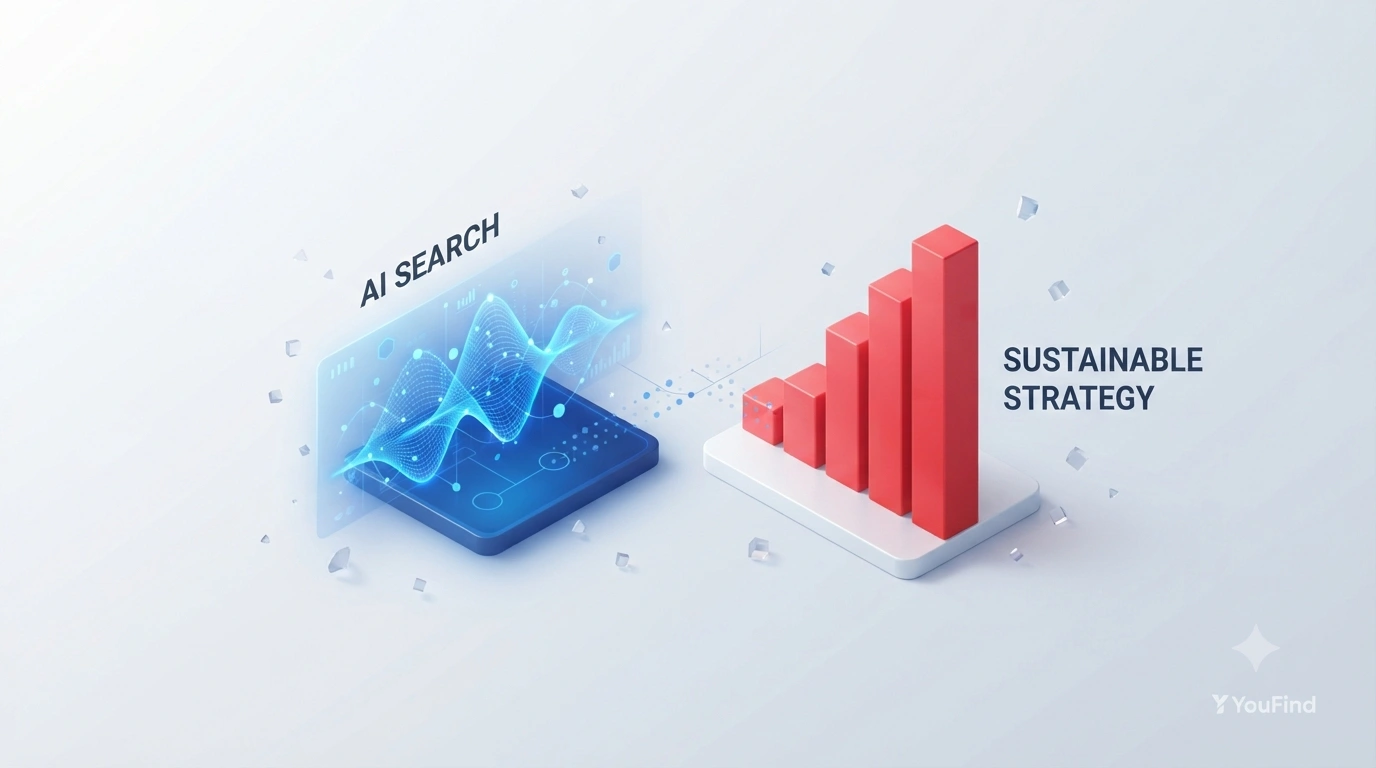


The full deployment of Google AI Overview (AIO) marks a new stage in search behavior. For Hong Kong business decision-makers pursuing high efficiency and Return on Investment (ROI), this raises a core commercial question: When AI provides answers directly on the Search Engine Results Page (SERP), is the commercial value of the website content we invested heavily in being diluted?
Our observation is that AIO is accelerating the polarization of content assets. For websites with standardized content that is easily summarized by AI, traffic and Click-Through Rates (CTR) are indeed facing challenges. However, for content that provides unique perspectives, local experience, and highly specialized insights, AIO actually acts as a powerful “authoritative endorser,” directing high-quality traffic to these sites. Therefore, the urgent task for Hong Kong companies is to shift their content strategy from “providing information” to “building assets.” Deeply mining the local cultural DNA of Hong Kong—Cantonese Localization—is the key strategy for establishing these irreplaceable content assets.
Re-evaluating Content Assets: Impact Analysis of AIO on B2B Traffic Structure
AIO works by synthesizing summaries from multiple authoritative sources. This means that if your content is merely a repetition of general industry knowledge or uses overly neutralized formal language, it can be easily absorbed and “digested” by AI into a summary, leaving users with no need to click through to your site. This “zero-click” phenomenon is particularly profound for B2B enterprises because B2B traffic value is extremely high; any loss of traffic directly impacts potential inquiries and the sales pipeline.
To successfully navigate AIO, we must return to Google’s core evaluation criteria: E-E-A-T (Experience, Expertise, Authoritativeness, Trustworthiness). In the AI era, these four dimensions have been given new weight:
- Experience: AI cannot create first-hand experience out of thin air. Content must include specific, verifiable real-world details.
- Trustworthiness: Websites must demonstrate high reliability in both technology and content, such as clear authorship, transparent editorial processes, and accurate structured data.
When your content exceeds AI’s synthetic capabilities in these dimensions, AIO will not only refrain from intercepting your traffic but will instead list your site as a “reference source”—an invaluable endorsement of brand trust. This requires our web design services and content strategies to be designed around “irreplaceability.”
Cantonese Localization: A Core Strategy Against AI Content Homogenization
In the Hong Kong market, Cantonese Localization is more than a language choice; it is a deep understanding of local business culture and user psychology. It leverages AI’s inherent weakness in processing specific contexts and emotional nuances, creating a powerful cultural moat for corporate content.
Subtle Differences in Search Intent: From Formal Language to Colloquial Business Insights
Local decision-makers in Hong Kong tend to use authentic Cantonese colloquialisms when conducting informal research. These expressions often carry strong business intent and risk-aversion psychology that standard formal language fails to capture.
| Search Intent Type | Standard Formal (Easy for AIO to Intercept) | Colloquial Cantonese (High CTR Potential) | Business Value Judgment |
|---|---|---|---|
| Risk Aversion | “How to avoid choosing low-quality suppliers?” | “Web Design Fear of Scams “ | Seeking real cases and blacklists; strong intent for inquiry. |
| Effect-Oriented | “Best website solutions for B2B enterprises” | “B2B Website Most Suitable Solution” | Seeking personalized, high-match professional website solutions. |
| Consultation/Comparison | “Recommended standalone site service providers” | “Standalone Site Setup Which One is Best “ | At the decision-making stage; needs authoritative comparison and endorsement. |
By naturally integrating these colloquialisms into titles and key paragraphs, we can directly hit the user’s true search intent, significantly improving the Click-Through Rate (CTR) on the SERP. This affinity and precision are difficult for AI to achieve through simple semantic analysis.
Building the Barrier of Local Experience: Integrating Hong Kong Business Scenarios
Experience is the dimension of E-E-A-T that is hardest for AI to mimic. Hong Kong companies must demonstrate deep local market understanding and practical experience within their content.
- Localization of Project Details: When sharing success stories, don’t just say “improved efficiency.” Specifically describe local Hong Kong elements involved, such as: solving system compatibility issues during logistics data exchange at the Kwai Chung Container Terminal, or integrating local interfaces like FPS (Faster Payment System) or PayMe for Business for cross-border payments.
- Professional Interpretation of Regulations: For B2B sectors, provide expert interpretations of the Hong Kong Personal Data (Privacy) Ordinance (PDPO) or specific industry regulatory requirements. This depth and localization are difficult for AI to extract from global databases.
- Transparency of Expert Identity: Ensure author pages detail positions in local Hong Kong industry associations, involvement in local projects, and unique insights into the local market. This reflects Authoritativeness and Trustworthiness more than any international certification.
Mastering these local details elevates your content from “information” to “industry insight,” making it a high-value asset prioritized by AIO citations.
Implementation Path: Integrating Localization into Professional Web Design and SEO
Implementing a Cantonese Localization strategy requires synergy between content, technology, and user experience. It is a systematic process rather than a simple copy adjustment.
Restructuring Keyword Strategy: Shifting from General Terms to “Problem-Oriented” Search
Traditional keyword research focuses on product or service names (e.g., “Web Design”). In the AIO era, we must shift focus to the “problems” and “pain points” users encounter during the decision-making process.
- Pain Point Terms: e.g., “SEO Service Traps “, “Web Setup How to Choose.”
- Scenario Terms: e.g., “Most Suitable Solution for Hong Kong SMEs,” “How to avoid traps in B2B procurement.”
By weaving these questions into H3-H5 headings, we not only attract clicks but also help AIO better understand the structure and value of the content. When providing professional website solutions, we use this problem-oriented strategy as the core of content planning.
Technical Synergy: Using AI to Enhance Structured Data Efficiency
We should not reject AI; rather, we should view it as a tool to enhance efficiency. AI has a natural advantage in processing structured data.
- Precision Application of Schema Markup: Use AI tools to quickly generate and verify structured data such as FAQ Schema and HowTo Schema. This tells Google and AIO your content structure in standardized language, greatly improving “extractability.”
- Optimization of Content Structure: Ensure the opening paragraph (approx. 50-100 words) directly answers the question posed by the H3 heading. This “Answer-First” structure perfectly aligns with AIO’s summarization habits.
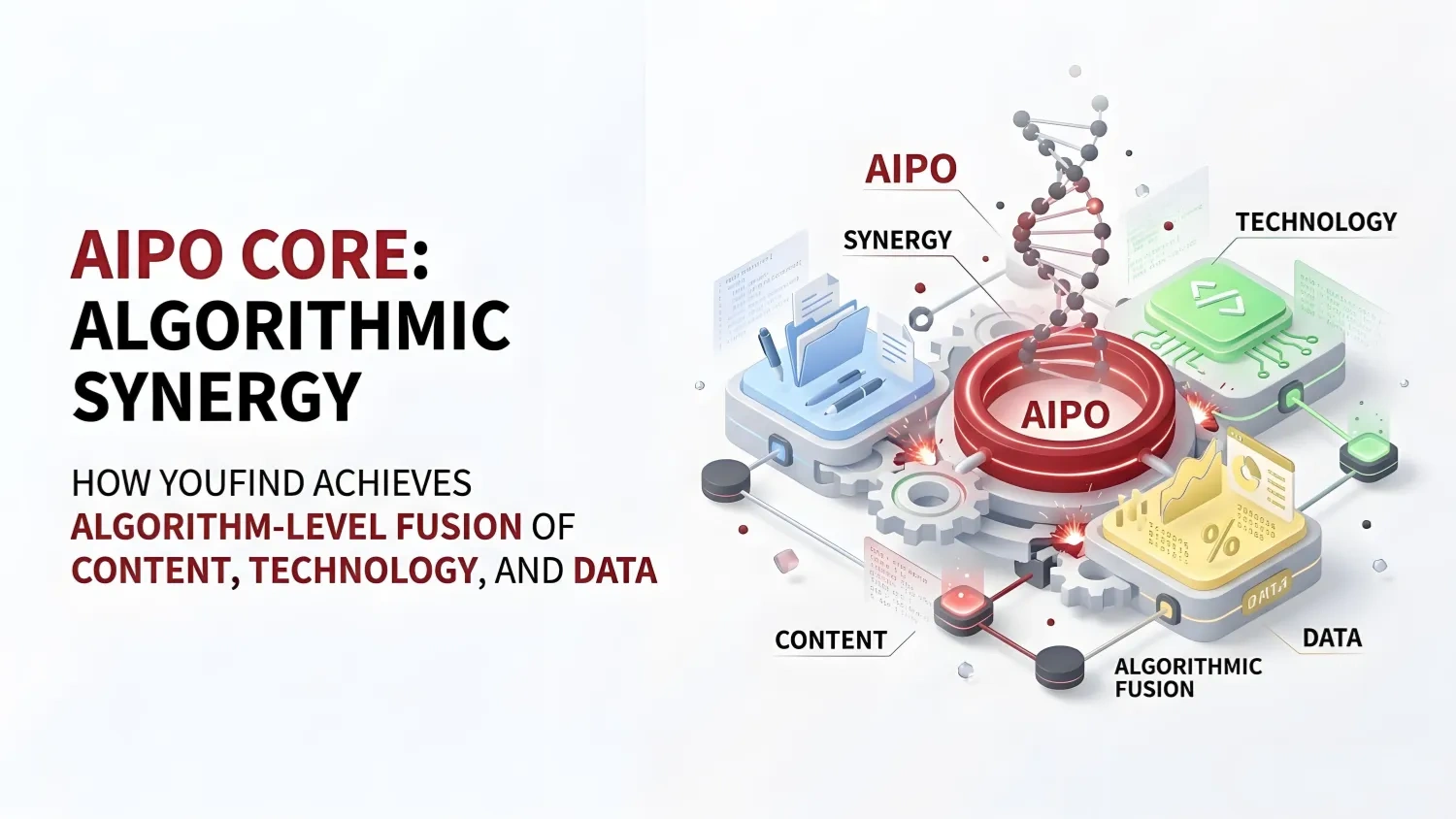
Through this dual optimization of technology and content, we ensure the content has the “human touch” to attract users and the “structure” to win over AI.
Frequently Asked Questions (FAQ): Deconstructing the Business Logic of Localized SEO
When formulating strategies, decision-makers often have questions about the long-term impact and ROI of localization. Here are our professional answers to core concerns in the Hong Kong market:
Q1: Will Cantonese content limit our global market expansion?
A: A successful SEO strategy is based on “market segmentation,” not a single language. If your target market is local to Hong Kong, Cantonese content brings higher conversion rates and lower acquisition costs. For global markets, we recommend using hreflang tags to clearly distinguish content for different languages and regions (e.g., zh-HK for Hong Kong, en-US for international).
Q2: In serious B2B industries, how do we balance professionalism with colloquial accessibility?
A: Professionalism is shown through depth; accessibility is shown through expression. We suggest an “Outer-Soft, Inner-Firm” strategy: use colloquial Cantonese in titles and introductions to attract clicks, but maintain rigorous formal language for core technical and data sections. This effectively boosts brand trust.
Q3: Besides content, how should our web design adapt to AIO trends?
A: Technical foundations are the cornerstone of E-E-A-T. In the AIO era, mobile loading speed, accuracy of structured data, and clear author information pages have become more critical. Our standalone site setup solutions always incorporate these technical details.
Q4: Will Google penalize content containing Cantonese colloquialisms as low-quality AI-generated content?
A: Quite the opposite. Google penalizes valueless, homogenized AI content. Authentic Cantonese expressions and specific local grammar are strong evidence of content “originality” and “human character,” which are treated as high-value resources.
Q5: How does the conversion path for traffic from localized content differ from traditional traffic?
A: Data shows that users entering via localized keywords typically stay on the site 30% longer. This resonance shortens the trust-building cycle. In B2B, this means the decision chain from “discovery” to “inquiry” becomes much more efficient.
Q6: If competitors start mimicking Cantonese localization, how do we stay ahead?
A: Language is just the medium; the true barrier is “depth of experience.” Leaders should continuously strengthen the Experience dimension by publishing industry whitepapers based on local Hong Kong data and technical leadership.
Q7: How can we ensure the security of core corporate data when using AI for localization polishing?
A: We advise companies to de-sensitize content before using public AI models. Never input undisclosed financial data or patents. AI should only be used for style optimization, while core insights remain controlled by human experts.
Q8: Given the frequent AIO updates, how often should localized content be maintained?
A: Content assets require dynamic maintenance. We recommend auditing high-value “Evergreen Content” quarterly to check data timeliness and new local search habits.
Conclusion: Building a Risk-Resistant Brand Trust Asset
The emergence of Google AI Overview is not the end of SEO, but a high-level filter for content strategy. For Hong Kong enterprises, this is a golden opportunity to transform content assets from “replaceable information” into “irreplaceable insight.”
True competitive advantage lies in who understands the local market more deeply. By systematically implementing a Cantonese Localization strategy into your professional website solutions, you will build a powerful brand trust asset that ensures you remain proactive in the competition for high-value B2B traffic.