

Establishing Consensus: Conversing with Algorithms via “Three-Layer Summaries”
Imagine an awkward morning: you led your team in using AI to painstakingly produce over a dozen professional articles on “Wealth Management,” expecting to dominate the traffic rankings. Instead, when your boss checks Google, the “Featured Snippet” prominently displays your competitor’s name, while your hard work remains buried.
Even more frustratingly, when you ask Gemini, “Which insurance company has the most professional retirement plans?”, the data and perspectives it cites come exclusively from your competitor’s website.
This isn’t a matter of luck; it is a breakdown in the “readability” of your content assets. In industries like finance and professional services—where trust is paramount—we face a new reality: previously, we only had to “write for humans,” but now, you must simultaneously “write for AI.” If you only produce soulless “AI fast-food content,” not only will readers remain indifferent, but search engines will flag your content as lacking uniqueness.
To break this deadlock, you must view AI as your “Chief Distribution Partner.” Rather than fearing replacement, learn how to feed AI high-quality content that it truly trusts and is eager to recommend. This guide will teach you how to lead your team through a strategic transformation—from “producing text” to “structuring knowledge”—in just two hours.
Before beginning optimization, the team must align on a common language. Modern AI evaluation mechanisms (such as E-E-A-T) are pragmatic: they don’t care about flowery adjectives; they care whether your information structure is clear.
We recommend using the “Three-Layer Summary” method to repackage your professional insights:
- Core One-Liner: Identify the specific pain point this article solves in the most straightforward, concise manner.
- Logical Trio: This serves as the “skeleton” for AI to crawl, allowing it to easily deconstruct your article into bullet points.
- Deep Evidence: Eschew vague claims. Provide concrete data, links to official regulations, or expert case studies.
The power of this framework lies in its precision: it feeds the information-gathering instincts of AI, increasing the chances that your brand will be cited in AI-generated answers.
| Optimization Dimension | Traditional SEO Logic | AIPO (AI Optimization) Logic |
|---|---|---|
| Core Objective | Keyword rankings and Click-Through Rate (CTR) | Information structuralization and semantic authority |
| Content Focus | Keyword density and backlinks | Direct answers and empirical data |
| Presentation Location | Search Engine Result Pages (SERPs) | AI Overviews / Zero-click positions |
Hands-on Practice: Transforming Content in 90 Minutes
This workshop requires no death-by-PowerPoint; just a whiteboard, sticky notes, and a few real-world content samples.
Exercise 1: Unearthing Real Pain Points (30 Minutes)
Stop writing “Corporate Visions” that nobody is searching for.
- Action: Take a primary keyword (e.g., “Voluntary Health Insurance Scheme”) and have the team use the 5W1H method to write 20 “simple questions” frequently asked by clients.
- Goal: Filter for topics with high “search intent.” AI prefers answering questions that have specific, standard answers.
Exercise 2: Injecting Authoritative Substance (30 Minutes)
Initial AI drafts are often “politically correct but hollow,” which can make your brand look amateurish.
- Action: Identify all vague assertions in the AI draft (e.g., “premiums are usually reasonable”).
- Goal: Direct the team to consult whitepapers from the HKMA, Insurance Authority, or major accounting firms. Replace vague terms with: “According to 2025 statistical reports, the average premium increase remained at X%.”
Exercise 3: Reshaping Citation Segments (30 Minutes)
Transform ordinary blog posts into “AI Exemplar Paragraphs.”
- Action: Reorganize content using the “Point → Data → Expert Interpretation” structure.
- Goal: Deliberately insert structural signposts like “First,” “The key is,” and “In other words.” These words act as navigation lights for AI, significantly increasing the likelihood of being cited.
Long-term Management: Building Your GEO Content Engine
A workshop is just the beginning. To sustain results, you need a Standard Operating Procedure (SOP):
- Create a “Content Opportunity List”: Do not create content sporadically. Rank the real questions found in Exercise 1 by their “AI Overviews citation potential,” and list old articles that require priority optimization.
- Human-AI Collaborative Review: AI is responsible for drafting and expansion, while humans handle “structuring” and “fact-checking.” Especially in the financial sector, every promise must be backed by compliance evidence.
- Quarterly Retrospectives: Review your progress every three months. Articles that have traffic but haven’t secured a “Featured Snippet” are your next optimization gold mines.
This process is not just about traffic; it’s about converting your expertise into “authoritative assets” in the digital world. When your content becomes the default correct answer for AI, you have already won at the starting line.
FAQ: 10+ Core Essentials for Advanced GEO Implementation
Q1: We have been doing SEO for years; will this GEO logic conflict with it?
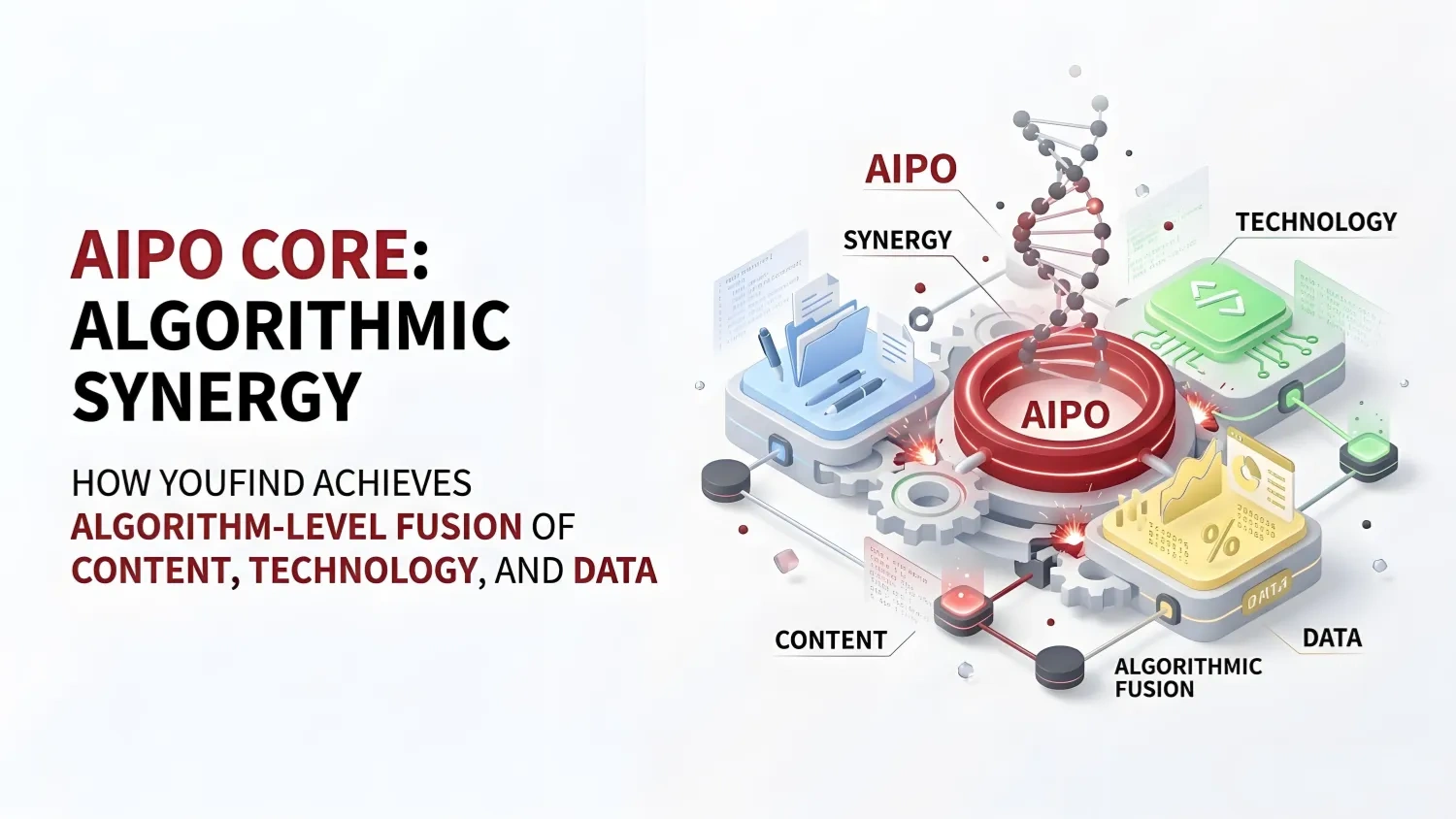
Not at all. GEO (AIPO) is an evolved version of SEO. While traditional SEO focuses on “keyword stacking” and “backlinks,” GEO (AIPO) emphasizes “information structuralization” and “semantic clarity.” Simply put, SEO brings people to your site, while GEO ensures AI understands your expertise and recommends you directly in “Position Zero” or AI dialogues.
Q2: How do we stay ahead if competitors use the same framework?
The key lies in “exclusive data” and “first-hand case studies.” While AI is excellent at synthesizing information, it cannot fabricate your company’s internal surveys, client success stories, or proprietary technical details. The more “unlisted, original” evidence you include, the more irreplaceable your authority becomes.
Q3: Is AI-assisted writing suitable for companies with strict requirements for Brand Voice?
Absolutely. You can define your Brand Guidelines as “Pre-prompts” for the AI. The AI handles the logical structure, while human editors provide the final “soul,” adjusting the tone and emotional resonance to suit Hong Kong readers. Remember, AI is your stenographer; you are the Editor-in-Chief.
Q4: Does this method work for social media (e.g., LinkedIn or Xiaohongshu)?
Yes. Although algorithms differ, the core of the “Three-Layer Summary” is increasing information density. On LinkedIn, this helps you quickly produce insightful professional posts; on Xiaohongshu, it helps translate complex financial info into easy-to-read guides. Clear, structured content has higher viral potential on any platform.
Q5: How do we manage legal risks in AI writing for regulated industries like insurance?
We recommend establishing a “Compliance Keyword Blacklist.” After the AI generates a draft, use automated scripts or manual reviews to filter out absolute terms like “guaranteed returns” or “highest.” The focus of GEO is making “correct and compliant” content readable, not risking compliance for traffic.
Q6: How long does it take to see results in AI citations after optimization?
This depends on the crawling frequency of search engines. Typically, you will observe ranking shifts for specific questions in Search Console within 2 to 4 weeks. For Generative AI like Gemini or Perplexity, you must wait for the model’s training library to update, usually showing significant citation changes quarterly.
Q7: If my website has a lot of content, which pages should I prioritize?
Follow the “80/20 Rule.” Prioritize articles that currently rank on the first two pages of search results but haven’t secured a Featured Snippet, or product introduction pages with the highest inquiry rates and conversion value. These offer the highest ROI.
Q8: In the Hong Kong market, does mixing Chinese and English affect AI interpretation?
No. Modern Large Language Models (LLMs) are highly proficient in multilingual processing. Retaining English for professional terms (e.g., MPF, Term Life, Annual Return) actually allows AI to align your content more accurately with global authoritative data, which also better suits the reading habits of Hong Kong professionals.
Q9: How can a small marketing team determine if content is truly “AI-friendly”?
A simple self-test: feed your paragraph directly to ChatGPT or Gemini and ask: “Please summarize the key points of this passage in three sentences.” If the AI’s summary matches your intent, your structure is successful. If it misses the point, your structure needs adjustment.
Q10: Does this workshop require involvement from the IT/Dev department?
Initial content optimization is primarily led by marketing and product departments. However, in the later stages, if you wish to automate “Three-Layer Summaries” within your site’s backend Schema Markup (structured data), technical coordination will be required to help search engines “see” your page structure more intuitively.
Q11: Will Google penalize me if all my content is written by AI?
Google penalizes “low-quality spam,” not AI itself. If you use human optimization to add unique insights and authoritative citations, an AI draft serves as an excellent foundation.
Q12: What if the AI writes something incorrect in the highly regulated finance sector?
This is precisely why we emphasize “Human-AI Collaboration.” AI provides the speed; professionals provide the oversight. The core of this workshop is teaching teams how to translate professional, compliant content into a format that AI can understand.
If you want to learn more about optimizing your digital content, visit the YouFind Official Website for the latest Hong Kong SEO strategies and GEO Professional Services. You can also learn more about our AIPO services.