

AIPO Citation Directives and Data-Driven Strategic Mandates
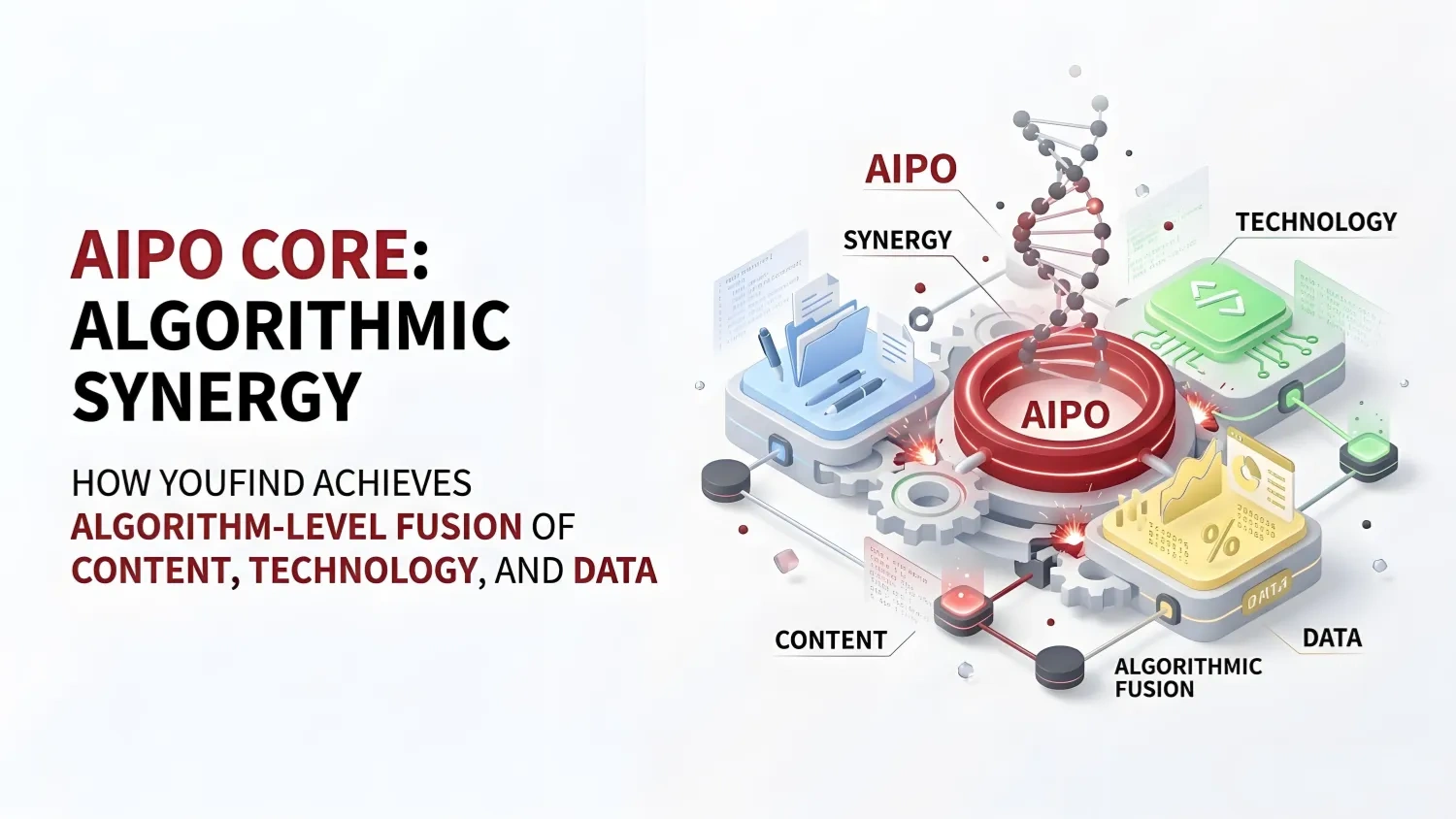
The digital strategy landscape is undergoing a profound transformation. In the past, traditional Search Engine Optimization (SEO) focused on rankings and traffic volume. However, with the launch of Google AI Overviews, brand requirements have shifted toward an integrated model of AI Platform Optimization (AIPO) and Conversion Rate Optimization (CRO). The core objective is to earn citation authority within AI systems and maximize conversion efficiency.
The current strategic imperative is to move beyond the challenges of “zero-click searches” and ensure brand content is selected as a trusted citation source by AI Overviews. This trust must be validated both technically through Schema Markup and behaviorally through user journey success rates tracked in Google Analytics 4 (GA4).
This report proposes a rigorous framework that integrates E-E-A-T (Experience, Expertise, Authoritativeness, Trustworthiness) principles, AI Overviews structural requirements, and GA4 data analytics. The ultimate goal is to build assistive content that AI systems can accurately interpret, deeply trust, and effectively leverage to drive business conversions.
Phase 1: Diagnosing Conversion Friction and Intent Alignment via GA4
A successful AI Overviews strategy must not only generate traffic but also ensure that traffic converts efficiently. Therefore, content creation must begin with a foundation of GA4 data to define and optimize key nodes in the user journey.
A. The Cost of Intent Mismatch: Quantifying Conversion Killers
Low conversion rates are a direct indicator of search intent misalignment and poor User Experience (UX). Inefficiency occurs when content, product offerings, or the UX fails to meet the needs and expectations of the audience.
Semantic Drift in content is a core issue. When a user searches for a tutorial but is directed to a sales page, or seeks pricing information but lands on a blog post, this mismatch leads to a poor experience and high exit rates. Over time, this misalignment damages site engagement and conversion rates. For businesses, this represents a waste of resources; even if traffic appears healthy, it fails to transform into leads or sales, reducing the overall ROI of marketing spend.
To measure these high-value actions, conversion goals in GA4 must be defined as SMART (Specific, Measurable, Achievable, Relevant, Time-bound) metrics. For complex B2B or lead generation funnels, high-value behaviors (e.g., form submissions) should be precisely tracked using recommended events (e.g., generate_lead). These events are critical for populating lead acquisition reports and must be accurately configured through Enhanced Measurement and custom events.
B. Advanced GA4 Funnel Analysis for AIPO Content Gaps
The “Funnel Exploration” report in GA4 is the backbone of CRO analysis. It visualizes the steps users take to complete a key task and, most importantly, evaluates user drop-off between each step.
The report explicitly displays the “Abandonment rate”—the percentage of users retained between the current and subsequent steps of the funnel. Identifying steps with high abandonment rates (e.g., a 30% drop from “view_item” to “begin_checkout”) allows for the pinpointing of friction sources.
By applying segmentation dimensions, such as “Device Category” (Mobile vs. Desktop), analysts can isolate UX or CRO killers in specific paths. This analysis reveals the concrete cost of Semantic Drift: when high-relevance traffic cited via AI Overviews shows high abandonment at the first transactional step in the GA4 funnel, it often indicates the content design failed to match the user’s true intent. The user’s intent might have been satisfied by the AI summary (informational/commercial), but the landing page forced a transactional goal prematurely. Consequently, a high abandonment rate is a quantifiable business cost of Semantic Drift, requiring the CRO team to adjust landing pages or pivot AIPO toward stricter transactional queries.
Precise GA4 funnel diagnostics guide CRO teams and content strategists to repair flaws in the conversion process in a structured, data-driven manner.
GA4 Funnel Diagnostics for CRO and Content Optimization
| Funnel Step (GA4 Event) | Relevant CRO Objective | Common Abandonment Causes | AIPO Content Strategy Fix |
|---|---|---|---|
| View Item/Service (view_item) | Engagement/Interest | Intent mismatch or poor mobile UX | Align content format with intent (e.g., Comparison pages for commercial intent) |
| Begin Checkout/Form (begin_checkout) | Intent Signal | Unclear CTAs, content overload, or friction in flow | Optimize transactional headlines and use concise, active-voice content structures |
| Purchase/Lead Gen (purchase/generate_lead) | Primary Conversion | Complex forms, lack of trust signals, or slow technical loading | E-E-A-T reinforcement (Trust), streamlined technical execution (Page Speed) |
Phase 2: E-E-A-T Credibility Transformation for AI Trustworthiness
AI search systems prioritize content that demonstrates Experience, Expertise, Authoritativeness, and Trustworthiness. This is not a mere suggestion; it is the fundamental filter for AI content selection.
A. Establishing Trust as the Paramount AI Overviews Ranking Signal
Among the four pillars of E-E-A-T, Trustworthiness is the most critical. For topics that significantly impact health, financial stability, or safety—known as “Your Money or Your Life” (YMYL) topics—the algorithm assigns even greater weight. Therefore, a brand aspiring to be cited by AI Overviews must first be perceived as unequivocally reliable.
This confirms a strategic shift: moving from traditional SEO tactics (like keyword density) to a more intelligent approach—focusing on the sophisticated communication of value, relevance, and trust. Content must be human-centric, going beyond information that Large Language Models (LLMs) can simply synthesize.
B. Content Value Engineering: The Requirement for “High Effort”
AI prioritizes content that provides “Information Gain” through substantial, non-LLM-derived research. This means content must include proprietary data, original case studies, survey results, or unique methodologies.
While there is no “perfect” word count, Google favors content that provides detailed solutions and comprehensive topic coverage, which often results in longer, more in-depth articles. High-effort content serves as tangible proof of expertise.
Furthermore, E-E-A-T content must be explicitly validated for AI through technical signals. Building trust (E-E-A-T) requires demonstrating expertise, but AI uses robust Schema Markup (AIPO) to verify and ground that expertise. This loop converts “soft” signals (credibility) into machine-readable “hard” verifications (attributed citations).
E-E-A-T Verification Mechanisms for AI Overviews Trust
| E-E-A-T Component | Content Strategy Requirement | Technical Verification Signal (Schema/AIPO) | AI Overviews Recommendation Impact |
|---|---|---|---|
| Experience | First-hand use, proprietary insights (Case Studies) | Author/Creator Schema, HowTo Schema (Demonstrating process), Review Schema | Proves practical, unique knowledge that LLMs cannot synthesize, increasing citation value. |
| Expertise | Comprehensive, in-depth subject knowledge | Article Schema enhancements, Semantic Clustering, Citation of proprietary data | Validates authority; positions content as an authoritative “Expert Summary” for AI. |
| Authoritativeness | Recognized industry standing | Organization Schema, strong internal and external Knowledge Graph connections | Reinforces brand entity as a reliable, high-confidence source for AI grounding. |
| Trustworthiness | Accuracy, safety, reliability (especially YMYL) | Security protocols, clear contact info, structured data defining business facts | Fundamental requirement; mitigates hallucination risks when AI cites the brand. |
Phase 3: Content Architecture and Multi-Modal Optimization (AIPO)
To secure brand recommendations in AI Overviews, content architecture must be reconstructed from the ground up to align with AI extraction and comprehension logic.
A. Structural Blueprints for AI Extraction and Understanding
The “Answer-First” methodology is the most critical step in structural adjustment. Every major section, particularly the beginning of a page, must open with a complete and concise answer to the headline or query. AI tools scan for quick takeaways and frequently extract these opening sentences as core summaries. If the answer is vague or buried, the likelihood of selection drops significantly.
Headline optimization should pivot toward “Search Intent Queries”: H2 and H3 tags should be written as direct, conversational search questions (e.g., “How does AI improve ad targeting?”). This helps algorithms understand the page structure and align content segments with specific user intents.
Content must be authored to facilitate Natural Language Processing (NLP):
- Active Voice: Enhances clarity (e.g., “AI improves targeting” is superior to passive constructions).
- Plain Language: Use familiar terminology and avoid jargon unless expected by the audience or clearly explained.
- Concise Paragraphs: Keep paragraphs short and focused on a single core concept to prevent information overload and facilitate AI parsing.
B. The Schema Master Plan: Defining Brand Entities for AI Citation
Schema Markup is the “standard language” used to communicate content meaning and entity relationships to AI. It adds a machine-readable layer that reduces ambiguity and strengthens attribution.
Strategic, large-scale deployment of Schema defines entities (products, services, authors, the organization itself) and their interconnections, establishing a Content Knowledge Graph. This reliable framework significantly increases brand visibility and citation rates in AI Overviews by lowering the risk of LLM hallucinations.
Essential Schema types for AI Overviews:
- FAQPage Schema: Explicitly marks question-and-answer pairs, greatly increasing the odds of selection for conversational AI Overview extractions. Combining high-value Q&A content with FAQPage Schema clearly informs Google that the content is structured for direct answers.
- HowTo Schema: Vital for instructional content, allowing AI to generate step-by-step guide summaries.
- Organization Schema: Establishes and clarifies brand identity, defining it as a known, trusted entity.
Structural Prompt Engineering:
Combining an “Answer-First” structure with robust Schema Markup can be viewed as a form of controlled, programmatic prompt engineering.
LLMs cite sources by grounding their output in reliable content. By following the “Answer-First” rule, the core summary snippet is placed in the first sentence. Simultaneously, Organization Schema defines the brand entity. By embedding the brand entity within the first concise sentence of an authoritative, high-E-E-A-T section and marking that entity relationship with Schema, a brand can pre-instruct the LLM on how to summarize and attribute information. This is a proactive strategy that maximizes the probability of being recommended in the most visible parts of AI Overviews.
Phase 4: Integrating CRO, Intent, and AIPO: The Content Direction Framework
The heart of content success lies in precision matching. Content must be strictly categorized by intent, with content formats, required Schema, and expected GA4 conversion goals perfectly aligned.
A. Mapping User Intent to Schema, Content Formats, and CRO Strategy
The “Intent-Content-Schema-Goal Matrix” ensures there are no friction points between AI Overviews optimization and conversion success.
- Informational Queries (Know): Require comprehensive guides and tutorials (HowTo, FAQPage Schema). CRO goals focus on soft conversions (lead magnets, sign-ups).
- Transactional Queries (Do): Require product-centric landing pages with clear, definitive CTAs and pricing details (Product, Offer Schema). CRO goals focus on hard conversions (purchases, direct submissions).
Content Intent Mapping for Unified AI Overviews and CRO Success
| Search Intent | Ideal Content Format | AIPO/Schema Priority | Primary CRO Goal (GA4 Event) |
|---|---|---|---|
| Informational (Know) | Comprehensive Guide/Tutorial/Analysis | HowTo, FAQPage, Article | Lead magnet conversion (generate_lead), Newsletter signup |
| Commercial (Investigate) | Comparison Pages, Expert Review Hubs | Review, Product (for comparisons), Organization | Consideration phase (Request demo, Download brochure) |
| Transactional (Do) | Product/Service Landing Pages, Pricing | Product, Offer, Review | Direct Purchase, Hard form submission |
B. Post-AI Overviews Optimization and Iterative Testing
Even if AI Overviews successfully drive high-relevance traffic, efficiency will suffer if the website contains conversion friction. Common CRO killers must be eliminated, including unclear forms, poor UX (e.g., irrelevant pop-ups, intrusive ads), weak CTAs, and slow loading speeds.
The Link Between Technical Speed and Trust: Technical performance (page load speed, clean code) is more than just a ranking factor; it is an AIPO processing factor. Fast-loading code allows AI systems to process and ingest content more efficiently before determining its value, enhancing the chances of selection. Slow technical execution hinders both human conversion and machine selection.
Finally, content architecture for AI Overviews must be iteratively refined using GA4 funnel data. If conversion goals are not met, content structures and Schema should be adjusted to correct the type of summary AI extracts, thereby rectifying semantic drift and better aligning traffic with the page’s CRO objectives. This ensures that AIPO success consistently translates into quantifiable business results.
Conclusion and Strategic Implementation Roadmap
In the era of generative search, competitive necessity demands a unified AIPO-CRO framework. Brand citations in AI Overviews are earned through a combination of rigorous E-E-A-T validation and sophisticated structural optimization.
The core of this strategic blueprint lies in programmatically executing four steps: diagnosis, credibility building, architectural control, and intent integration:
- Diagnosis: Continuously monitor GA4 Funnel Exploration reports to identify and segment high-abandonment steps, quantifying the cost of search intent failures and UX defects.
- Credibility: Transform content to meet “High Effort” requirements, focusing on proprietary data and human-centric experience signals to build the trust required by AI.
- Architecture: Implement “Answer-First” structures and a comprehensive Schema Master Plan (Organization, FAQPage, HowTo, Product) to programmatically guide AI citation and attribution.
- Integration: Rigorously map content intent to formats, Schema, and conversion goals to ensure visibility gained via AI Overviews directly translates into commercial outcomes.